
"plantation decline"
1000 article(s) found

Flavor and taste of Papua New Guinea Coffee Manor
However, it is almost inevitable that the surge in production leads to a decline in quality. Before 1991, the quality of coffee was good, and most of it belonged to open Y and so on. After 1991, the quality gradually declined, and then the European market was lost.

A brief introduction to the origin, development, history and culture of Nicaraguan boutique coffee beans with mild taste
Nicaragua is located in central Central America, bordered by the Pacific Ocean to the west and the Caribbean Sea to the east. The highlands in the north and the coastal plains in the east are part of the Central American volcanic belt. The eastern plain is high-temperature and rainy, with a tropical maritime climate. The suitable climate provides an excellent growth environment for the cultivation of coffee. High-quality Nicaraguan coffee, grown in the north and middle of the country. Coffee is Ni.

Introduction to the varieties and flavors of Nicaraguan Coffee Manor with smooth taste
In many countries, coffee production will be seriously affected for political reasons. Nicaraguan coffee industry is no exception. The 1979 revolution forced coffee planters to flee to Miami. A period of indecision followed, when the government considered whether to redistribute land (including many plantations), which led to a shortage of coffee and a decline in production since the early 1970s

Introduction to the Flavor description Price of Tanzania's Fine Coffee beans
The national average annual output of wheat is 70, 000 tons, and the largest wheat production unit is the HANNANG wheat complex, which is composed of several farms with a total planting area of 4000 hectares. These farms are located in the Hannang district of Arusha and are all autonomous subsidiaries of NAFCO. In the 1970s, NAFCO developed and operated these farms with the help of the Canadian International Development Agency (CIDA)

Introduction to the characteristics of Coffee Flavor description in Nicaraguan Tianyi Manor in Central America
Nicaraguan coffee of high quality is in the forefront of coffee beans in the world and enjoys a good reputation. Its particles are moderate in size, mild in taste and very aromatic and mellow. Nicaragua is located in central Central America, bordered by the Pacific Ocean to the west and the Caribbean Sea to the east. The highlands in the north and the coastal plains in the east are part of the Central American volcanic belt. The eastern plain is high-temperature and rainy, with a tropical maritime climate. Suitable

Kenya Coffee Plantation Kenya Coffee Production Area
Rare good coffee-known for its rich aroma and balanced acidity. Coffee professionals consider Kenyan coffee to be one of their favorite products because Kenyan coffee contains every feeling we want from a good cup of coffee. It has a wonderful, satisfying aroma, balanced acidity, well-proportioned particles and excellent fruity notes.《

Kenya Coffee Plantation Kenya Coffee Production Area
Rare good coffee-known for its rich aroma and balanced acidity. Coffee professionals consider Kenyan coffee to be one of their favorite products, because Kenyan coffee contains every feeling we want from a good cup of coffee. It has a wonderful, satisfying aroma, balanced acidity, well-proportioned particles and excellent fruity notes.《

Kenya Coffee Plantation Kenya Coffee Production Area
Rare good coffee-known for its rich aroma and balanced acidity. Coffee professionals consider Kenyan coffee to be one of their favorite products because Kenyan coffee contains every feeling we want from a good cup of coffee. It has a wonderful, satisfying aroma, balanced acidity, well-proportioned particles and excellent fruity notes.《
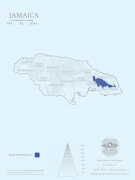
How about Jamaica coffee? Introduction and Grading System of Jamaica Coffee
Governor Sir Nicholas Rouse in 1728 received coffee plants from the governor of Martinique and immediately planted them in the St Andrews area. Production was limited in the first half of the century, but as coffee cultivation expanded from St Andrews to the Blue Mountains, it flourished in 686 plantations. By 1814, Jamaica's peak annual production exceeded 16,5

What are the common varieties of coffee in Angola? How should I drink Angolan coffee?
Professional coffee knowledge exchange more information about coffee beans Please follow the coffee workshop (Wechat official account cafe_style) Coffee is one of the largest agricultural products in Angola. It was not until 1973 that Angola was the third largest coffee producer controlled by Portugal. During the Eurico de Azevedo Noronha presidency of the Institute of Angola, Angolan Coffee went in 1973.

A brief introduction to the planting Market Price of Fine Coffee Bean varieties in Tian Chi Manor
Nicaragua is now one of the poorest countries in Central America. Due to its poor economic foundation, the coffee industry is still relatively backward, while coffee farmers are in extreme poverty. Fortunately, Nicaraguan coffee has received some foreign aid funds to improve the quality of its coffee. Coffee from Madagelba, Sinodega and Segovia in Nicaragua

Flavor and taste characteristics of coffee in Tianyi Manor introduction of high-quality coffee beans in producing areas
The excellent Nicaraguan coffee is among the highest in the world, it is mild and delicious, moderate granule, very fragrant. In many countries, coffee production has been seriously affected for political reasons. Nicaraguan coffee industry is no exception. The 1979 revolution forced coffee planters to flee to Miami. It was followed by a period of uncertainty, and the government considered whether to re-divide it.

Introduction to the Coffee Flavor description of mild Lemon Manor in Nicaragua
Nicaragua is one of the major coffee-producing countries, producing high-quality coffee. Even coffee from the Antigua Mountains of Guatemala, which is famous in Asia, imports raw beans from Nicaragua. Although Nicaraguan coffee is not famous in Asia, Nicaragua coffee is already famous all over the world (Starbucks has many cooperative coffee farmers in Nepal), while several coffee-producing countries in Central America

A brief introduction to the cultivation of fine coffee beans in Tianqi Manor with moderate particle size, geographical location, climate and altitude.
When tasting Nicaraguan coffee, it is best to drink cold water first, so that you can better feel its mellow taste. Drink coffee while it is hot, because the tannins in Nicaraguan coffee are easy to change during cooling, and the taste becomes sour, which will affect the flavor of the coffee. You can add the right amount of sugar, and then add cream. Enjoy a cup of high quality Niga

Tanzania coffee boutique coffee beans introduce flavor and taste manors in producing areas
Wheat: the national average annual output of wheat is 70, 000 tons, and the largest wheat production unit is the HANNANG wheat complex, which is composed of several farms with a total planting area of 4000 hectares. These farms are located in the Hannang district of Arusha and are all autonomous subsidiaries of NAFCO. In the 1970s, NAFCO developed and operated these with the help of the Canadian International Development Agency (CIDA).

Introduction to the planting environment of Kenyan boutique coffee bean manor with delicious and slightly alcoholic aroma
There are two types of coffee farms in Kenya. One is a large plantation that covers an area of more than five acres, but the average elevation is low. In the case of Kenyan coffee, the coffee beans of the large farms are of medium quality. The best Kenyan beans come from small farms, most of which are located in the foothills or volcanic slopes above 5,000 to 6,000 feet. Each small farmer has a capacity of only 20 to 70 bags per season.

A brief introduction to the Origin and Development of Fine Coffee beans in the fragrant and delicious Heavenly Manor
Nicaragua is now one of the poorest countries in Central America. Due to its poor economic foundation, the coffee industry is still relatively backward, while coffee farmers are in extreme poverty. Fortunately, Nicaraguan coffee has received some foreign aid funds to improve the quality of its coffee. Coffee from Madagelba, Sinodega and Segovia in Nicaragua

A brief introduction to the treatment method of Grinding degree and Baking degree of Coffee in Joy Manor of Nicaragua
In many countries, coffee production will be seriously affected for political reasons. Nicaraguan coffee industry is no exception. The 1979 revolution forced coffee planters to flee to Miami. A period of indecision followed, when the government considered whether to redistribute land (including many plantations), which led to a shortage of coffee and a decline in production since the early 1970s

A brief introduction to the planting Market Price of Fine Coffee Bean varieties in Tianqi Manor
Coffee is Nicaragua's main export. According to the president of the Nicaraguan Coffee Farmers' Federation, due to the poor harvest of coffee in Nicaragua's Pacific region, the country's total coffee production in 1998 may be 12% lower than that in 1997. In the coffee year of 1997 and 1998, Nicaragua harvested 1.422 million bags of coffee (each bag of 46kg), which has been producing 1% of coffee in the past 14 years.

Brazilian coffee industry Brazilian coffee bean production and processing technology Brazilian coffee export and sales
Professional coffee knowledge exchange more coffee bean information please follow coffee workshop (Wechat official account cafe_style) Brazilian coffee industry Brazil's coffee industry accounts for about 1/3 of the world's total output, is currently the world's largest coffee producer. Coffee plantations in Brazil cover a total area of about 27000 square kilometers, mainly in Minasji in southeastern Brazil.